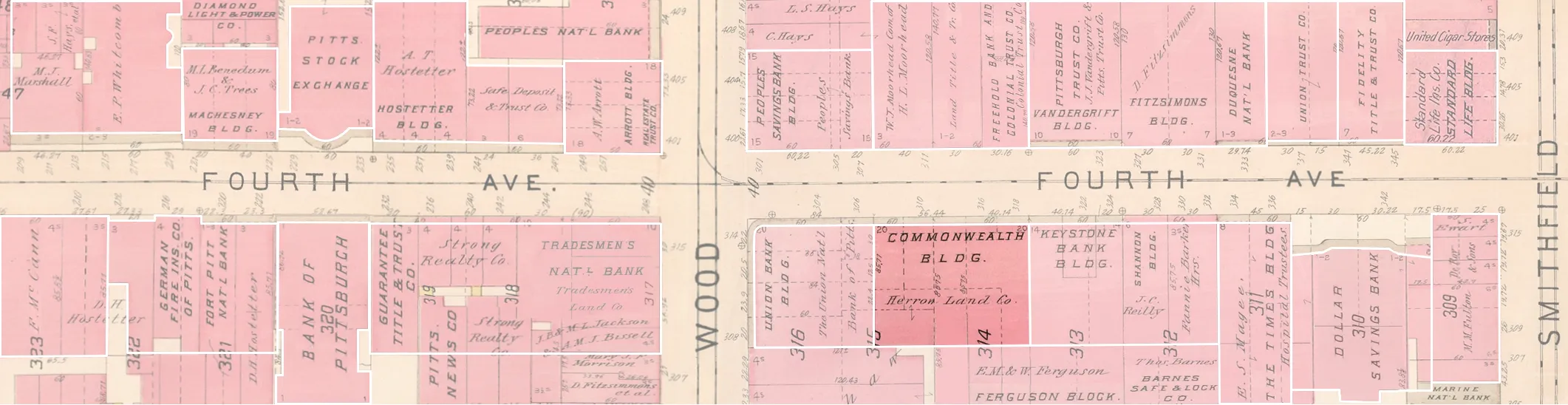

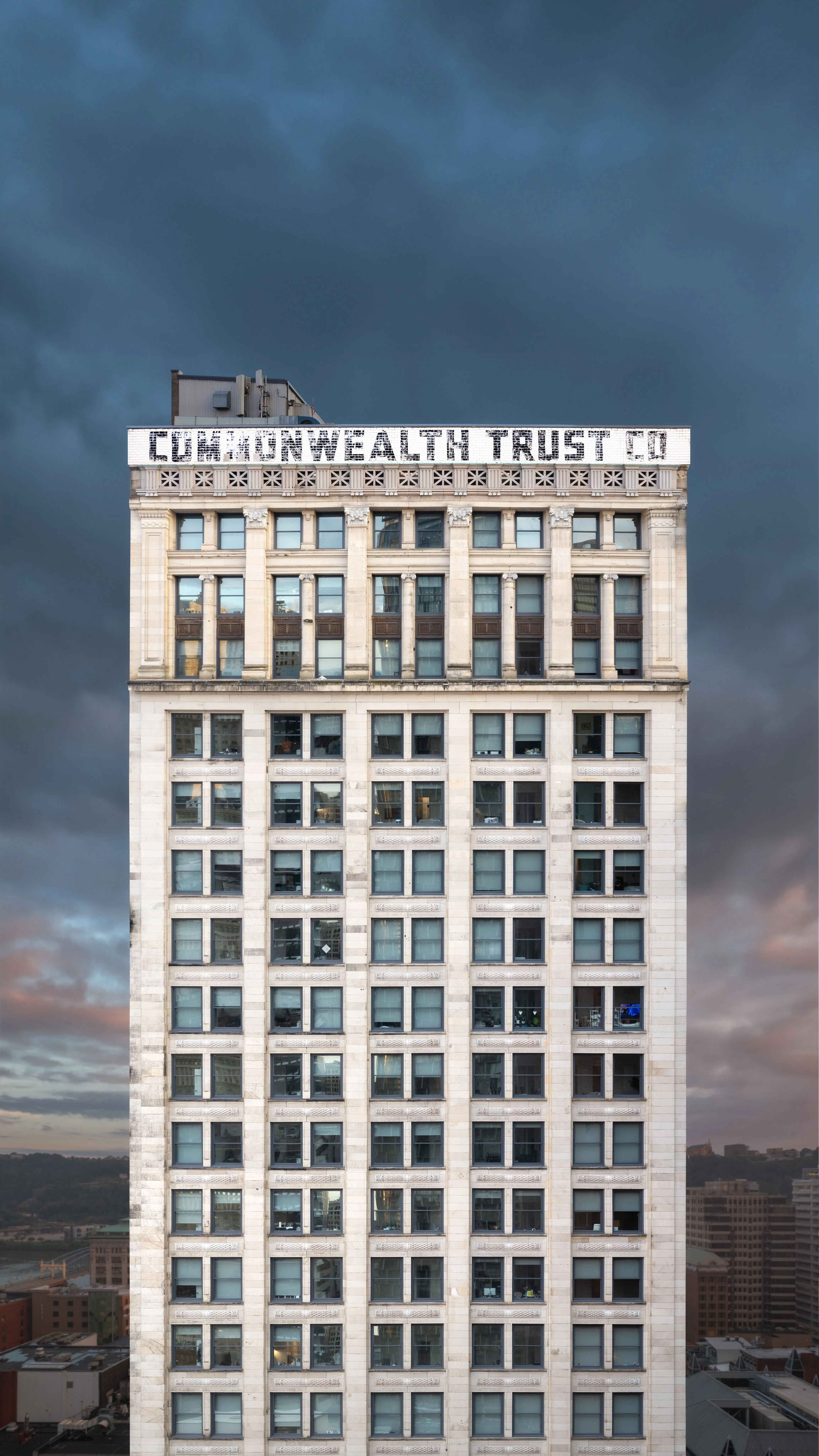
Commonwealth Trust
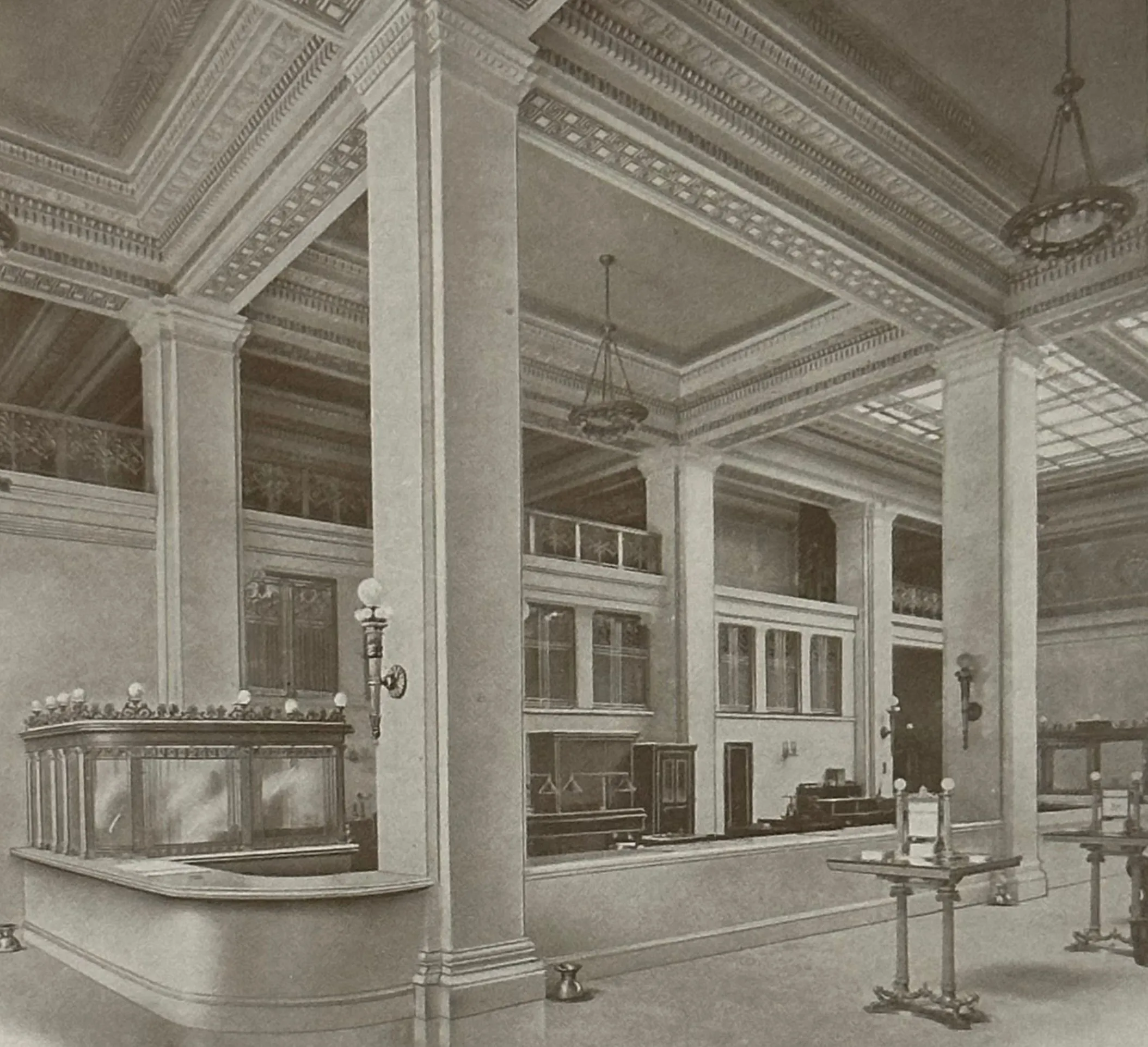
When this skyscraper opened in 1907, the Pittsburgh Post exclaimed: “The trend to more beautiful banking houses for Pittsburgh has reached its apex, for the present at least, by the Commonwealth Trust Company.”
Back then, the main business transacted in its grand ground floor involved management of investments, securities, and estates held in trust, such as the vast acreage that once belonged to Mary Schenley. She had donated a major chunk of it in Oakland for a big city park, and after her death in 1903, Commonwealth and its president, John Herron, were trustees to handle the sale of her still-sprawling holdings.
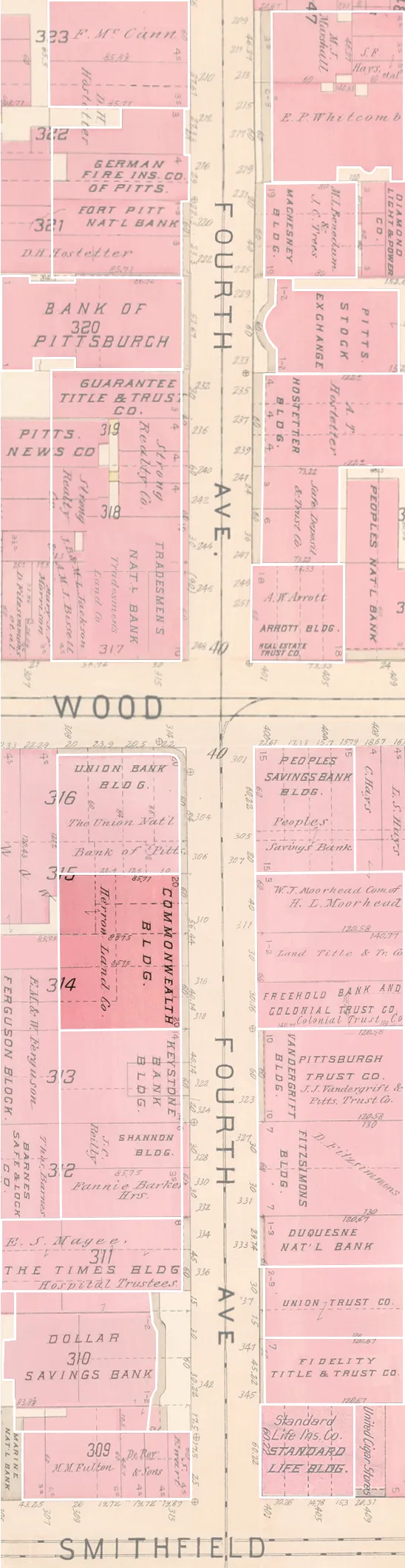
Built simultaneously with its neighboring skyscraper, Union National Bank, Commonwealth was absorbed by that institution in a 1964 merger. Like several former financial skyscrapers in the district, both have been converted to residential use.
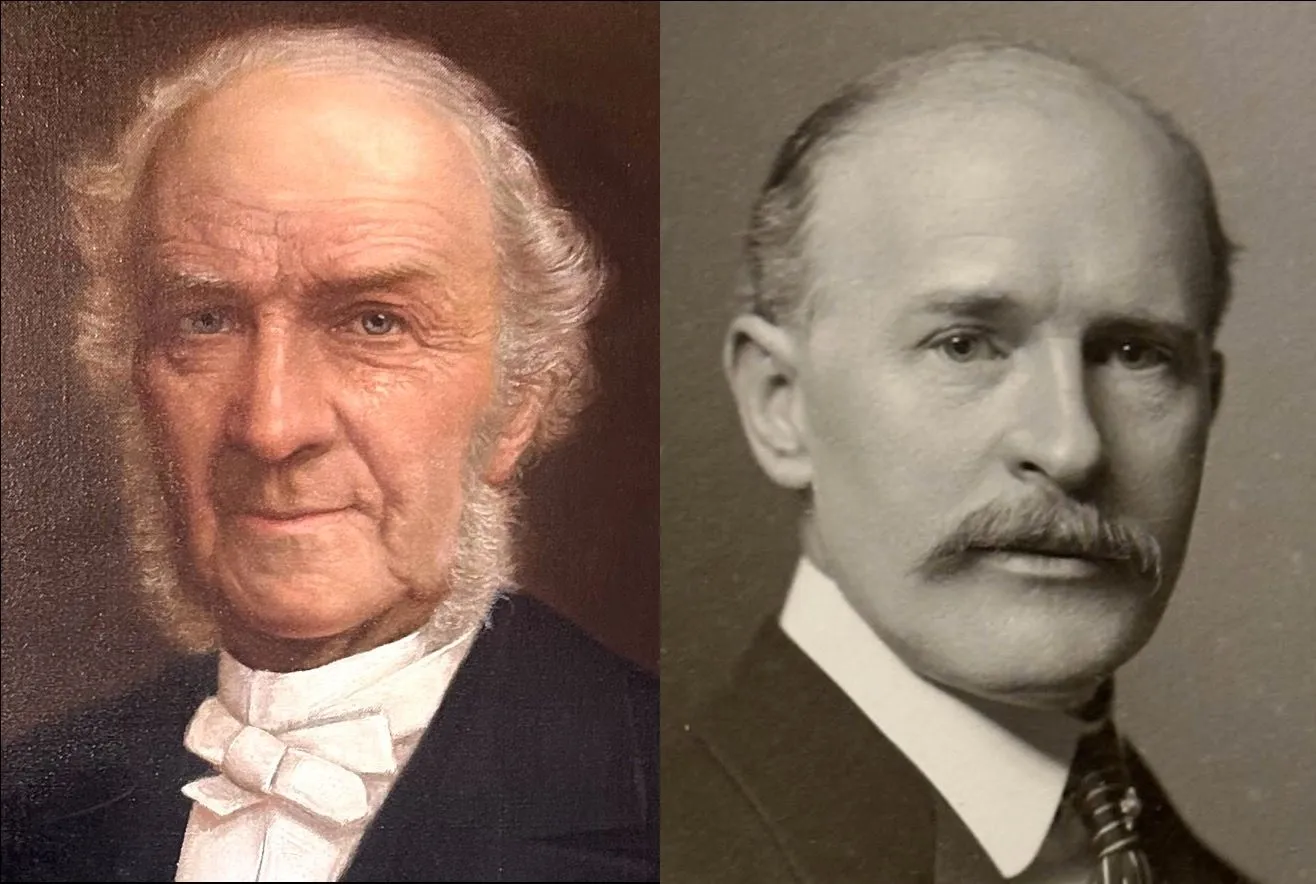
William & John Herron
The Herron family owned considerable land in the area, including coal mines in the far reaches of the neighborhood now known as the Hill District. It used to be called Herron Hill, a name retained in one of its key arteries, Herron Avenue.
William Herron worked for his father managing their coal mines, then got into banking and real estate. He managed Mary Schenley's properties for her, and after his death, his son, John, took over the business and eventually became the trustee tasked with selling her land and giving the proceeds to her family. Herron was prominently involved in the development of East Liberty, Shadyside, and Mount Lebanon.
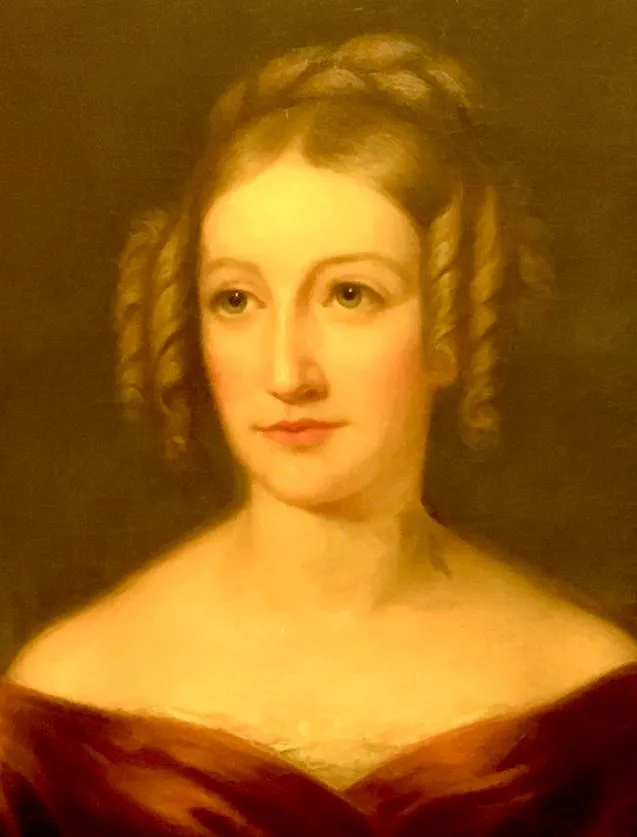
Mary Schenley
A wealthy Pittsburgh teenager away at a New York boarding school in 1842, Mary Croghan caused a stir when she fell for Edward Schenley. The British officer and decorated veteran of the Napoleonic wars was much older than she was, and when the couple married and eloped to England, her father tried to get the U.S. navy to intercept their ship.
Even after donating 300 acres and selling another 120 acres at bargain price to Pittsburgh for the park that bears her name, Mary Schenley was still the largest landowner in Allegheny County when she died in England in 1903.