
PPG Place
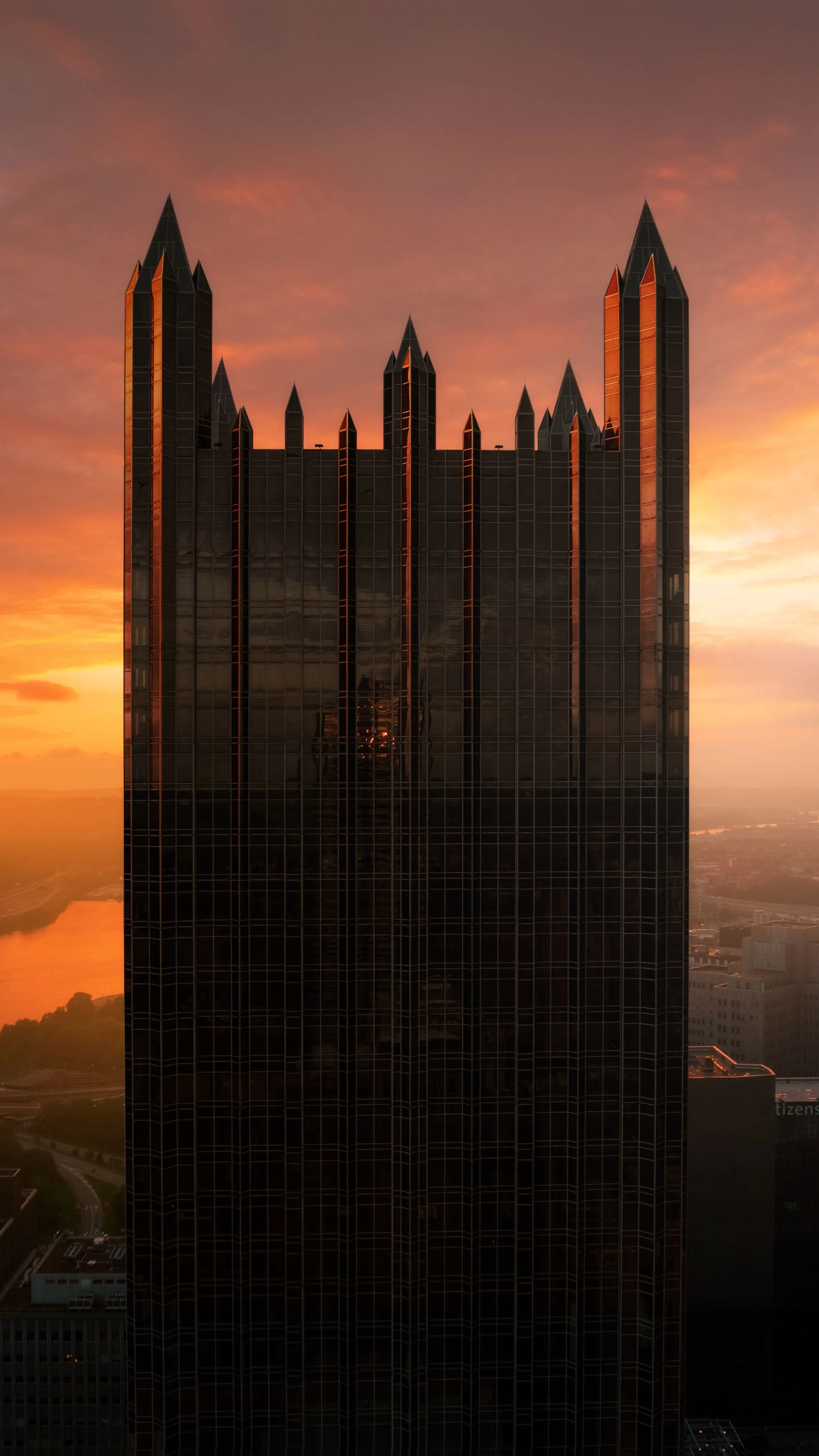
While not the tallest skyscraper in the city’s skyline, PPG Place is surely the most recognizable. Its famous architect, Philip Johnson, said it was inspired by the University of Pittsburgh Cathedral of Learning, an Art Deco take on traditional Gothic forms that Johnson had formerly scorned, until gradually coming to find its silhouette captivating.
The building was a centerpiece of a skyscraper and subway construction spree called Renaissance II. Culminating in the 1980s, the project attempted to counteract a crushing economic collapse caused by steel mill closures and widespread layoffs.
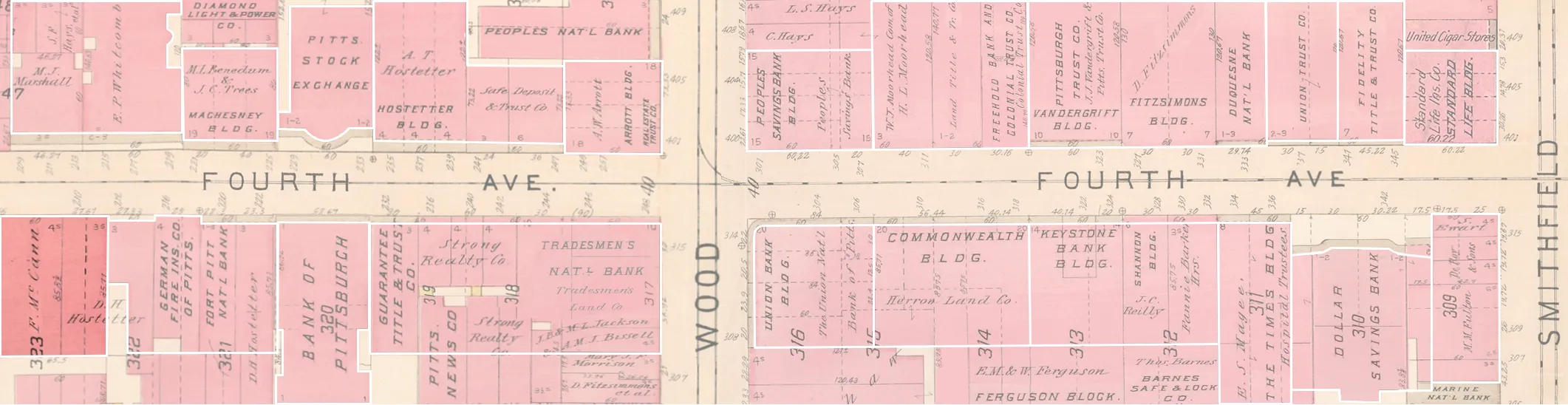
The tower’s glass sheathing reflects not only sunlight but the main business of the anchor tenant, PPG, or Pittsburgh Plate Glass. The company was founded in 1883 by John Ford, with offices on Fourth Avenue. It was the first glassmaking company to fire its furnaces with natural gas, a plentiful fuel source in the region that was then only just beginning to be exploited. The main product line was plate glass window panes, and the dawn of skyscrapers with their walls of windows brought PPG a steady stream of contracts.
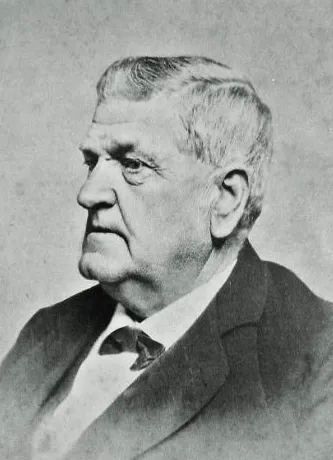
John Ford
An Indiana manufacturer of iron tools and rails, and then steamboats, John Ford was impressed by a glass works he saw while visiting his son, who was studying at a Pittsburgh business school. Ford tried manufacturing glass back in Indiana, then relocated here and opened a plant in nearby Creighton on the Allegheny River.
The site appealed for two reasons: It had good sand for glassmaking and natural gas to fuel the furnaces. Ford took on a business partner, Robert Pitcairn, who with Jacob Vandergrift had developed natural gas pipelines for manufacturing. The two built a bigger glass factory upstream in Armstrong County, and a town to house its workers: Ford City.
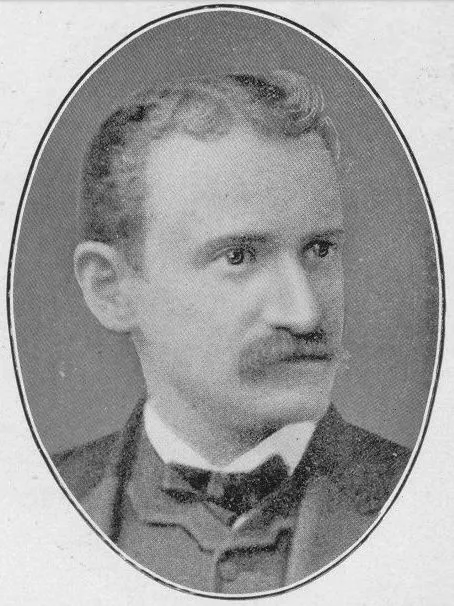
Jacob Gusky
A New York City transplant with a knack for marketing and advertising, Jacob Gusky had a department store on this spot. He was widely known for his charity, and held annual gift parades at Christmas, accompanying a costumed Santa Claus to the city’s orphanages to give toys to the children.
When Gusky died of heart disease in 1886 at the age of 41, his widow, Rebecca, took over the business and ramped up the charitable giving. She founded a Jewish orphanage in Observatory Hill as a memorial to her late husband, and donated an elephant, dubbed “Gusky,” to the city’s first zoo.