
Times Building
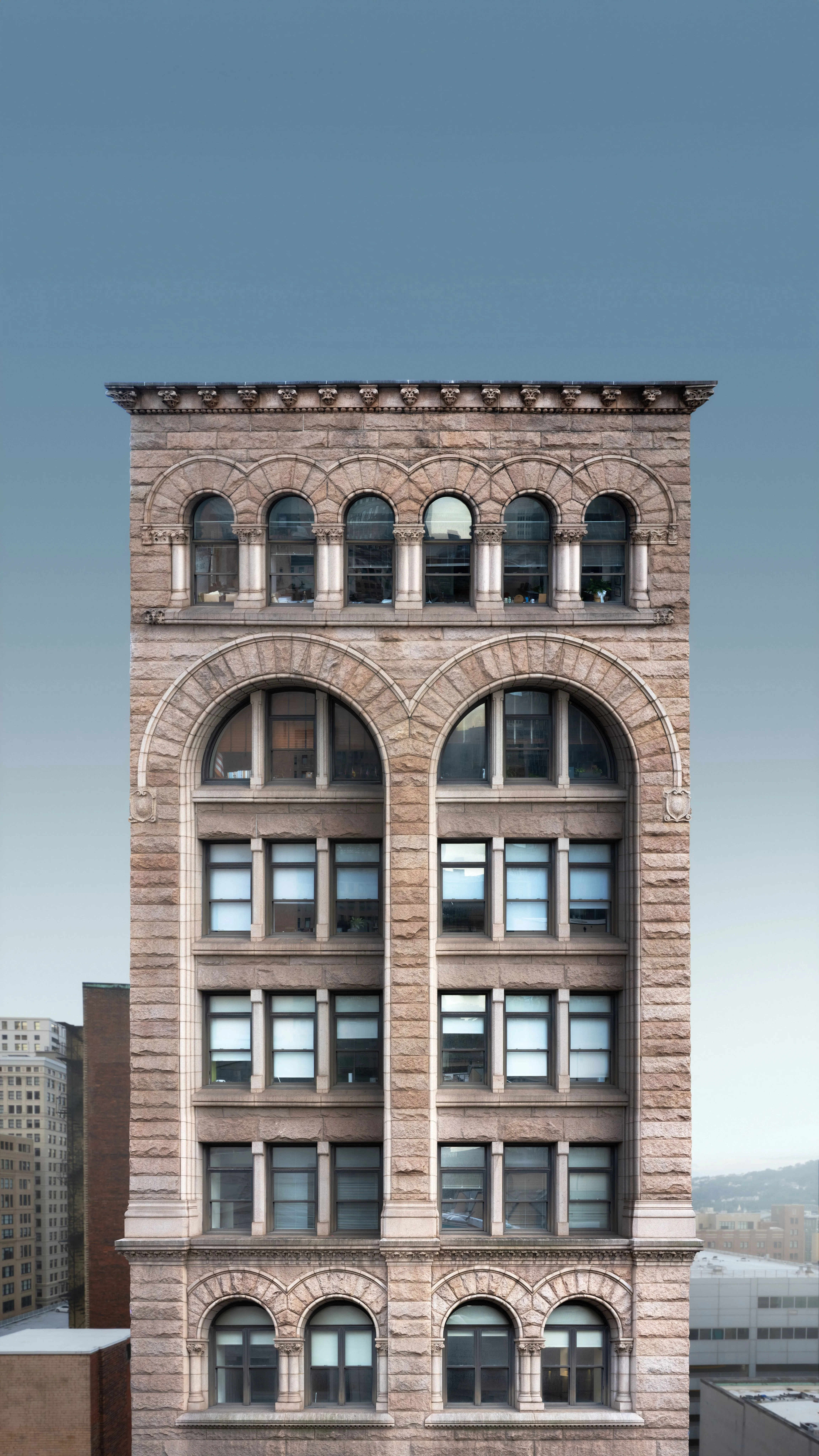
This handsome carved granite edifice that opened in 1892 signaled a revolutionary advance in technology. The proof is on the inside, in its skeleton of girders qualifying this as the city’s first skyscraper — albeit one only eight stories tall. With a steel frame holding everything up, exterior walls no longer had to support the weight of the structure, setting the stage for taller and taller buildings to come.
Robert Nevin was one of the first people to distill the sticky black goo that occasionally bubbled up and fouled nearby salt wells into a something that could be used for fuel. With the money he made in the oil business, Nevin bought one local newspaper and launched another, The Pittsburg Times.
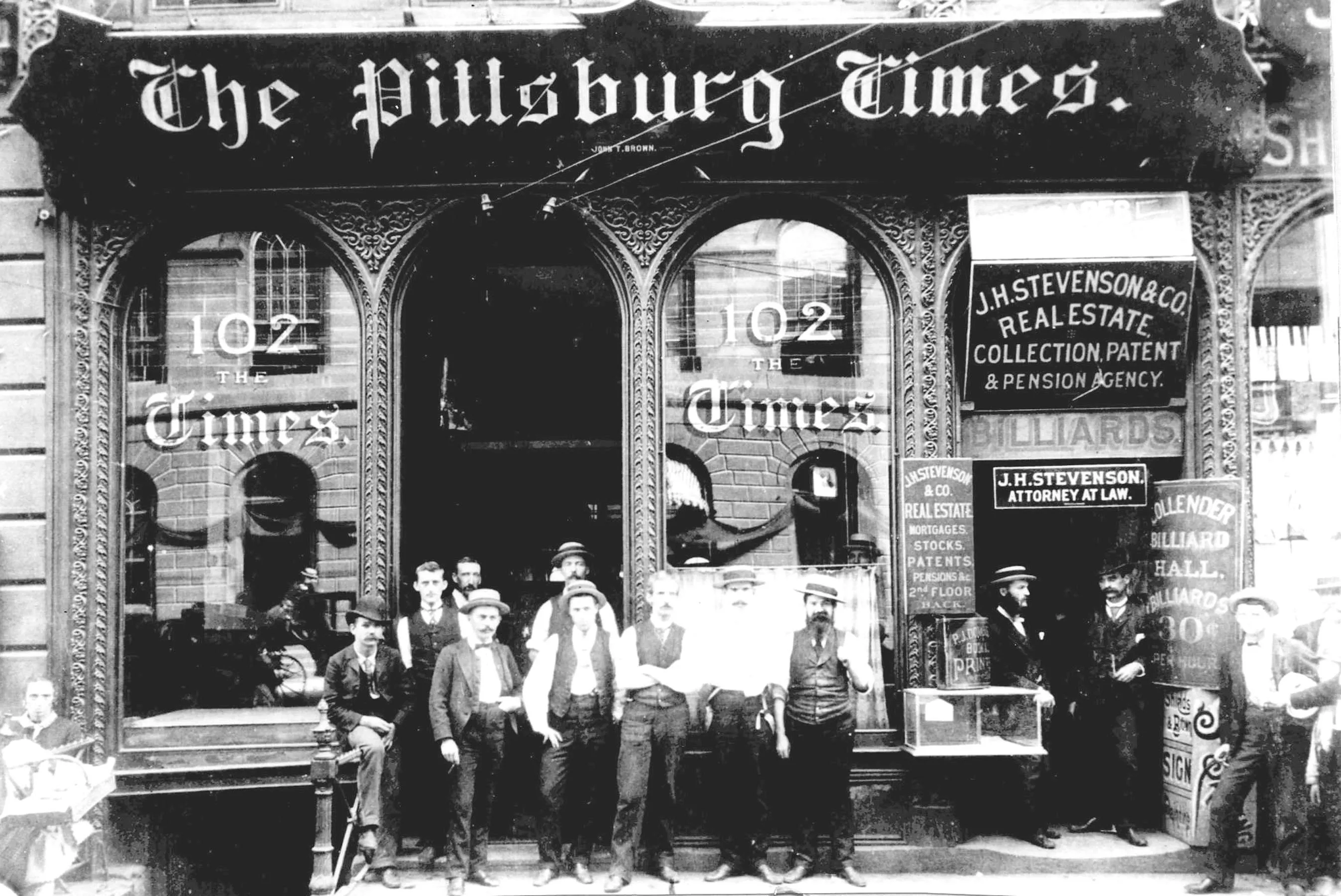
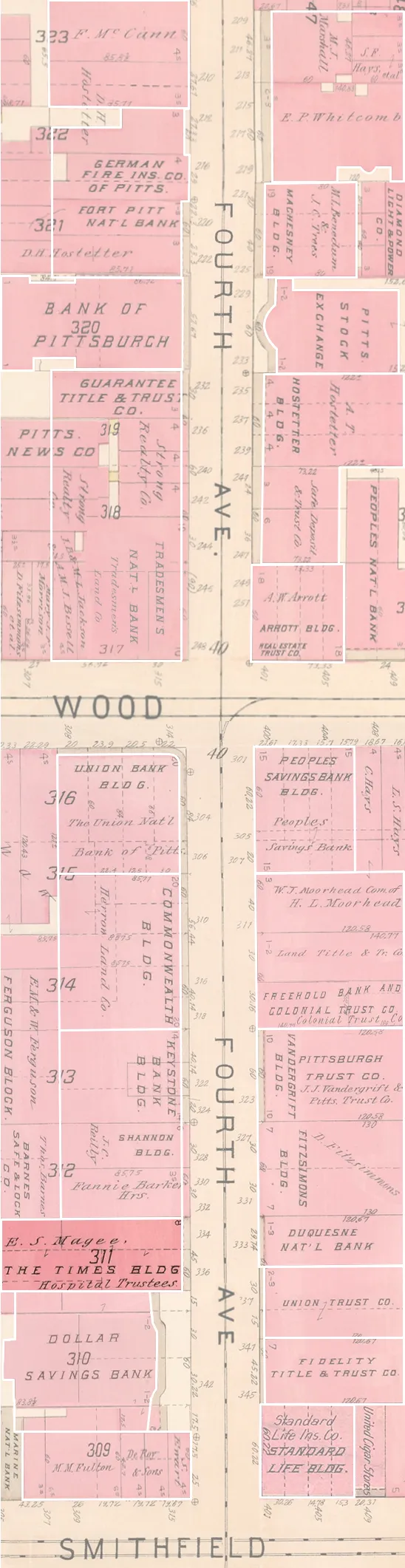
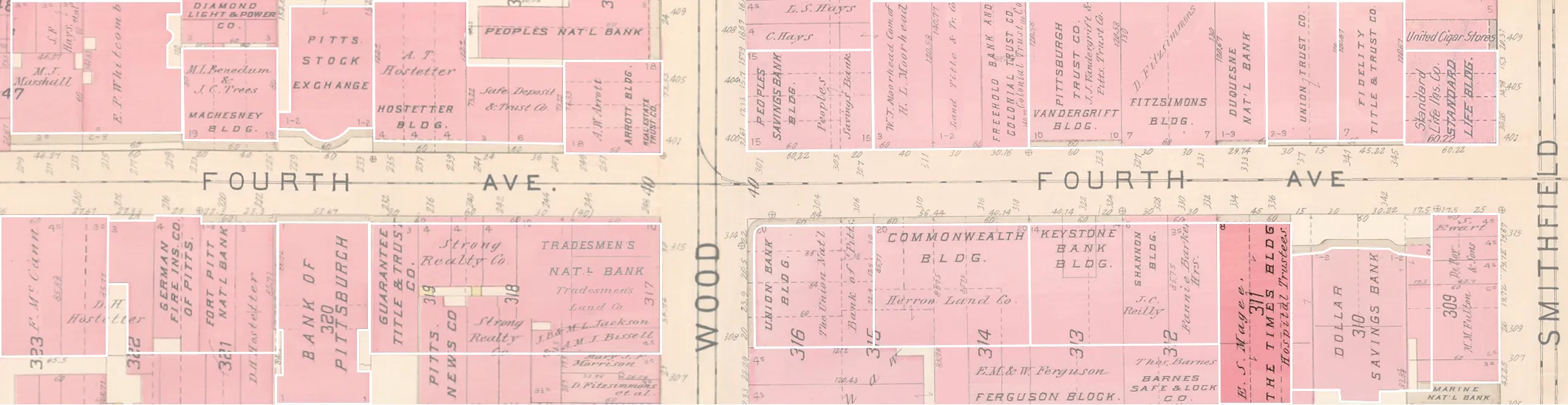
He then sold the Times to a powerful Republican politico, Chris Magee, who commissioned local architect Frederick Osterling to design a new home for it. The press in the basement could print and assemble 48,000 copies per hour of the Times, a forerunner of the Pittsburgh Post-Gazette. Today the building’s main occupant makes software for hospitals to track patient care.
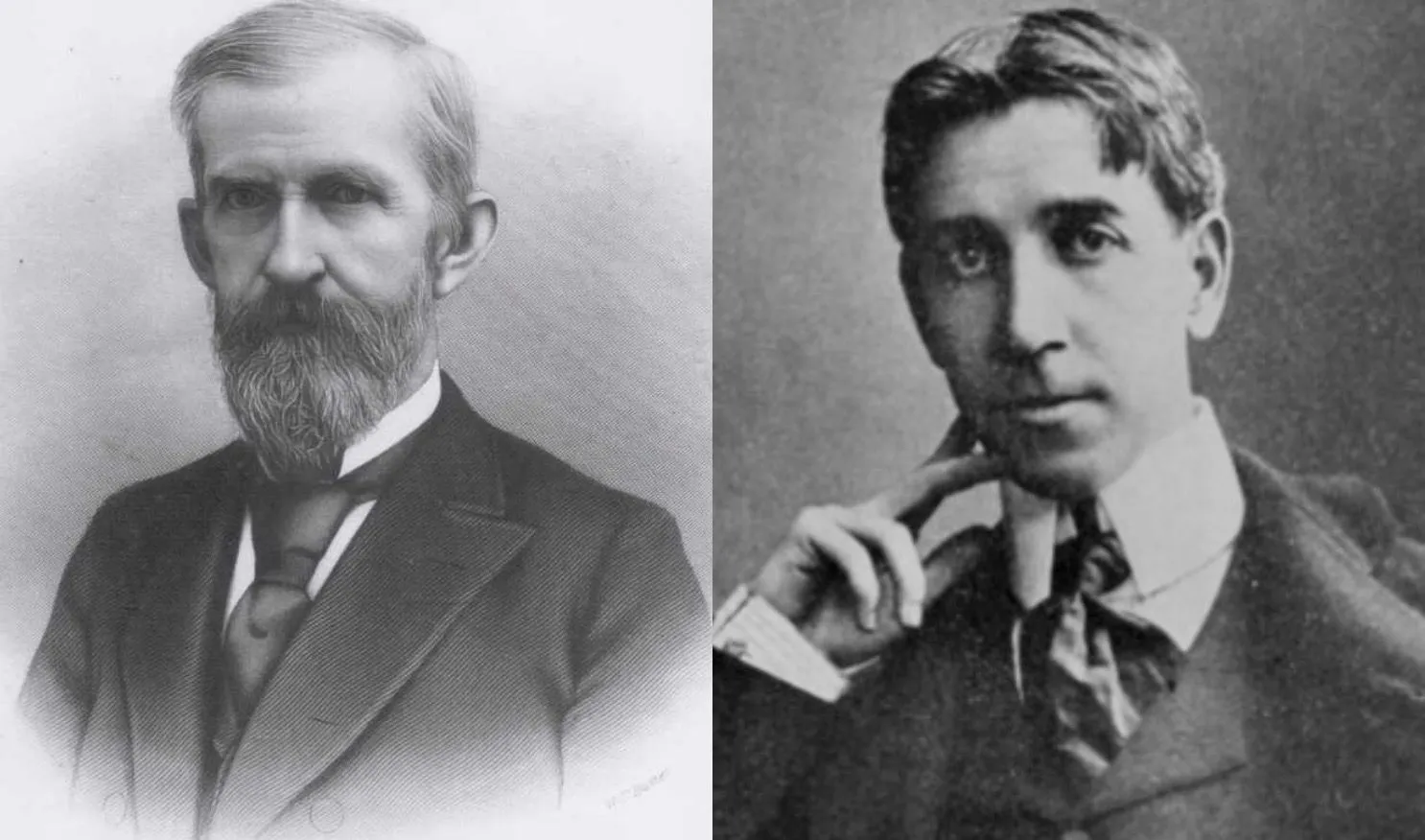
Robert & Ethelbert Nevin
Times founder Robert Nevin was an amateur composer who once penned a campaign song for President James Polk. When his son, Ethelbert, expressed his own wish to become a musician, Nevin tried to dissuade him. He did not succeed, and Ethelbert Nevin become a hit songwriter of the 1890, whose sheet music for his songs including “Narcissus” and “The Rosary” sold hundreds of thousands of copies.
Nevin did not attain quite the same fame as Pittsburgh’s best known 19th century songwriter, Stephen Foster. Unfortunately, like Foster, he also suffered from depression and died before his 40th birthday. Both men’s music was adapted by John Philip Sousa in his “Pride of Pittsburgh” march, which the bandleader premiered on tour in the city in 1902.
The music of Ethelbert Nevin performed by Pittsburgh pianist Donna Amato is featured throughout the audio tour.
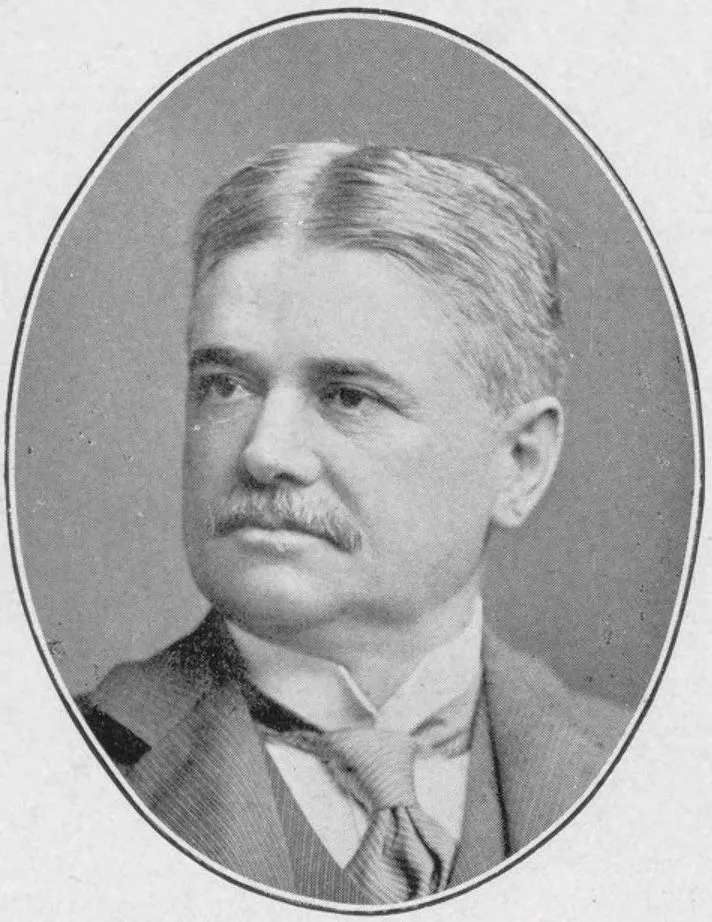
Chris Magee
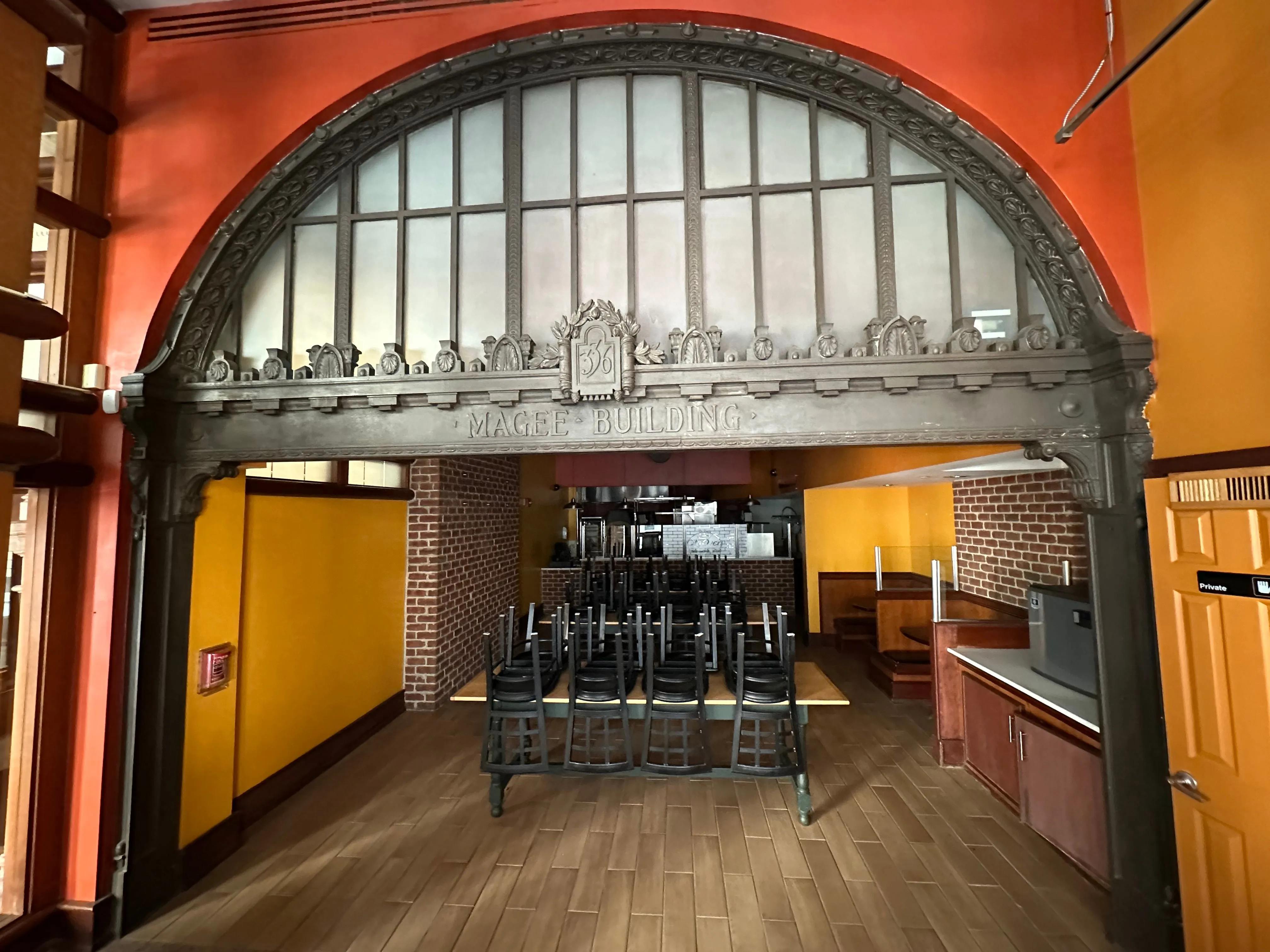
A Republican political boss who held sway in Pittsburgh and Harrisburg in the late 1800s, Chris Magee purchased the Times from Nevin and commissioned this highrise for it. An ornamental bronze entryway arch, now moved inside, bears an alternative name used for the structure: “Magee Building.”
Magee rose to power after being elected city treasurer at the age of 23, and made a fortune starting with investments in private streetcar lines, benefiting from his influence in municipal government. Derided by some critics for his backroom deals, Magee was widely popular and was hailed for his acts of generosity. His mansion in Oakland was converted into a hospital for women, which preserves his name to this day.
PARTNER